

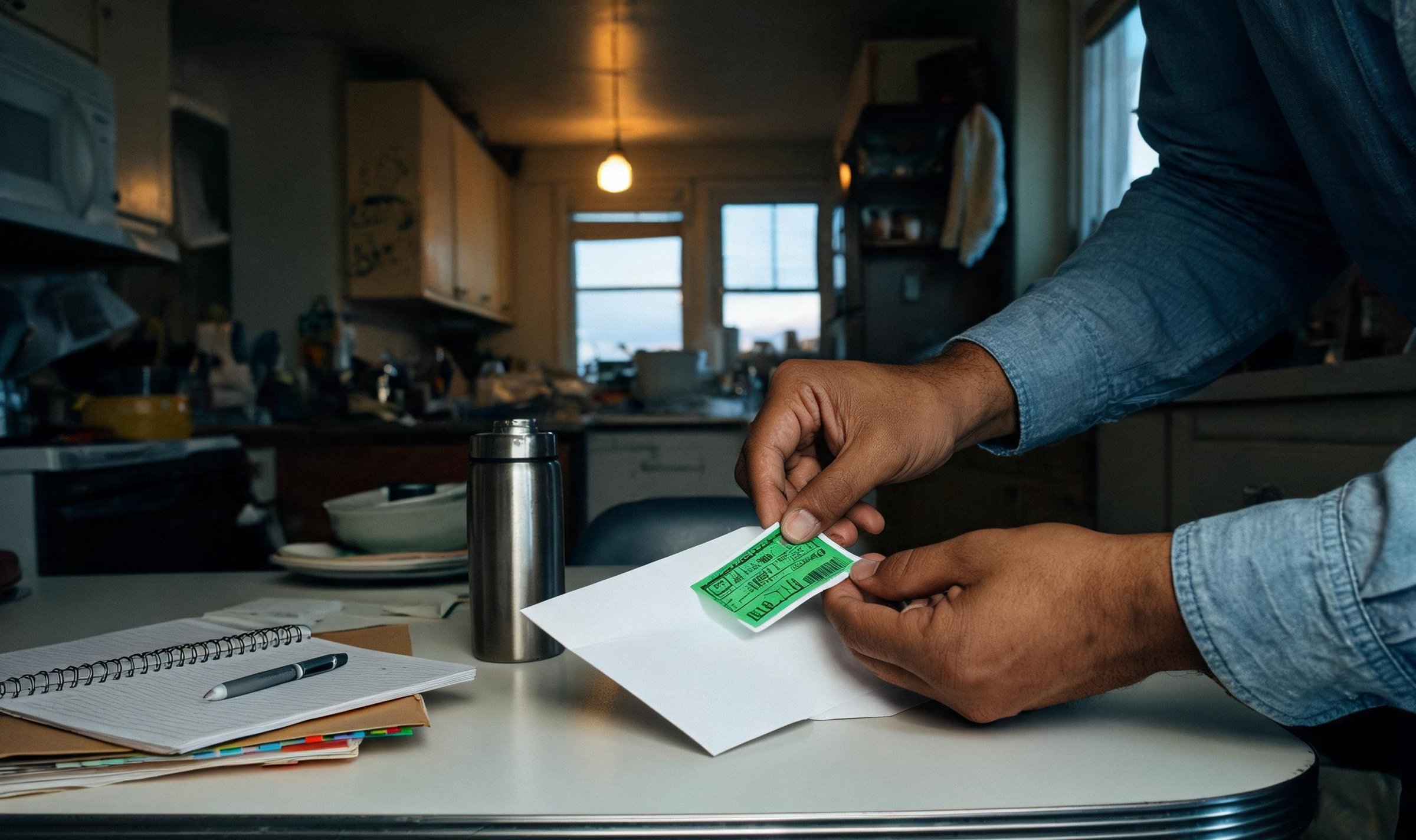
This is a composite. The people are assembled from several files; the sequence is the one that repeats.
Renata Ibarra Cole said eleven words to a debt collector on a Monday in March, and they worked that afternoon. That fact cost her the next six months, because she thought it meant the account was finished.
The account was a store card she closed in 2023, owing $2,860, charged off that winter and sold to a collector the next year. The collection had been on her TransUnion and Experian files since the spring of 2024. She knew about the card. She did not know about the collector until it found her work number.
Monday 3 March 2025. The collector called her at work for the third time that week. She had seen the phrase in an ad the night before and had it saved on her phone: "Please cease and desist all calls and contact with me, immediately." She read it into the receiver. The man on the other end said he would note the account. The calls stopped that day, which is what Regulation F, § 1006.14(h), requires once you tell a collector not to use a medium. She had told it not to use the phone.
Wednesday 5 March. She mailed the same sentence, on one page, certified. The green card came back on the 10th. Now § 1692c(c) applied too, and the collector could write to her only to say it was stopping, that it might use a remedy, or that it was going to use one.
March to June. Nothing. She told her sister it worked.
Monday 14 July. One letter, one paragraph: the collector intended to file suit for the balance. It was the third exception in the statute, word for word. She read it twice and decided it was the kind of letter they send everyone.
Tuesday 2 September. A process server, at her door, at 6:40 in the evening. The summons had a date on it by which she had to answer the court.
Tuesday 23 September. Three weeks after the knock, with the date close, she sat down with a legal aid attorney and filed an answer in time. She also brought a bank statement she had kept for two years for no reason she could name: a $400 payment to the store in June 2023 that the collector's figure had never credited.
October. The collector's attorney produced the account history. The $400 was not on it. Her statement was.
Monday 17 November 2025. The case closed on a written agreement at $2,460, in monthly payments. The collector updated both bureaus to the agreed balance, and the number has gone down every month since.
From the loan officer's chair: a pending lawsuit is a question the application asks out loud, in the declarations, and it stops a file until there is an answer. An open collection under a written payment agreement, at a balance the borrower can document, is a line in the letter of explanation. Same debt. The difference was an answer filed on time.
At the table on Pecan Boulevard, my mother kept one drawer for letters she did not want to open. Every one of them, when we finally opened them, had a date in it.
What could not be fixed: the debt was real. The collection reports for seven years from the first delinquency, and it will be on her files into 2030. The eleven words bought her four months without the phone ringing at work, which she needed, and nothing else, which nobody had told her. Calvin has the rule: the phrase governs how a collector talks to you, and it never reaches the balance, the court or the file. Like Dolores, she had the one document that mattered in a drawer the whole time.
The morning after the agreement was signed, Renata set up the first payment, moved the summons and the green card into one folder, and answered an unknown number on the second ring. It was her dentist.
If a collector is calling, say the words if you need the quiet. Then open every envelope that comes after, and put any date from a court on the calendar the day it arrives.
Sources
- Fair Debt Collection Practices Act, 15 U.S.C. § 1692c(c) — ceasing communication, and the three exceptions
- Regulation F, 12 CFR § 1006.14(h) — prohibited communication media
- Fair Credit Reporting Act, 15 U.S.C. § 1681c(a)(4) and (c) — seven years from the date of first delinquency
- Uniform Residential Loan Application (Fannie Mae Form 1003 / Freddie Mac Form 65), Section 5 declarations — "Are you a party to a lawsuit in which you potentially have any personal financial liability?"
- Calvin Noman — The eleven words are real. The law is from 1977.
- Tomás Nadier — The collection for the apartment she had already left
Every statutory citation in this article was checked against the source listed before publication. Nothing here is legal advice; if your situation has legal consequences, talk to a licensed attorney in your state.